After going to the Doula Meet & Greet through our hospital a month or so back, we had done a little digging only to find out that the Doula, Rachel, we met – who was part of the Doula co-op – also offered Doula services independently. So, yesterday we met her to have a chat and see if she was the right fit for our birth.
And honestly, it went perfectly. She is a totally smart lady with perfectly hippy ways… the exact personality and influence we want for our experience.
I also have to mention that we have received a lot of comments like, “isn’t Mark supposed to be your birthing coach?” And so on… but, it must be mentioned that even just working towards the process of selecting a doula and following her movie/book suggestions to date have made me feel like Mark and I are more of a team in this. He is really taking the time to understand what I will be experiencing (he’s even watched some live births), what our baby will be going through, and how – together with our doula – we can have the best birthing experience possible. If anything, the doula is helping Mark to be more of a birthing coach and support than I think he could have imagined without her.
Anyway, here are some of the questions/responses from our meeting:
- What happens if I go into labor during a time that you just can’t make it? (This was a concern because through the co-op you just get whoever is on call, but with an individual, you’re just counting on one person.) She ensured us that she does have a couple back-ups, but is confident it won’t be an issue.
- When I’m laboring at the house, can you check how dilated I am? How will you know when it’s time to go to the hospital? No medical procedures will be performed. She will observe physical labor signs and will base everything on my comfort level, distance from the hospital, time of day, etc.
- Your closest birthing class is over an hour away from us. Are there other options? Yes. I can offer the 8 (or 16 – I can’t remember) week class to you in (2) 4-hour sessions at your house for the same price. This will include lessons on breastfeeding as well.
- What are your thoughts on the different birthing positions? While the mother is in “transition” or pushing, I don’t let her stay in one position for over 20 minutes. By staying active (aka: changing positions), you’re promoting movement within your body, which can really speed up the process.
- Can you be in water after your water breaks? Yes!
- We want minimal-to-no intervention. How do we make this happen? It’s very important to make a birth plan. This will help guide the hospital staff in providing you the labor that you want. I will also put a sign on the door to remind the nurses and staff to refer to your birth plan, keep voices low and respect the peace. Also, there are ways to prepare your body through your diet. For instance, at 34 weeks, you should double your probiotics and increase your garlic consumption. This will help to fight the Strep B virus and prevent you from having to be put on antibiotics. Also, at 36 weeks, you’ll want to really increase your vitamin C intake with 1-2 Emergen-C packets per day.
- Do you have sample birth plans? My favorite is from Earth Mama Angel Baby. Here’s a link!
- Have you noticed delivery timing patters for new moms? Yes, the most common delivery is at 41 weeks and 1 day. (I hope not… means I might have my baby at my friend’s wedding! SHIT!)
- What does the birthing doula service include? A 36-week home visit to do some paper work, get me acquainted with your house and where you keep things so that the day of your delivery, I don’t have to ask where things are and can just move about, supporting you both. Then, of course, the birth. I will be there while you’re laboring at home and through your birth. And I will return for a postpartum visit three days after delivery. At this time, you’ll be at home and I can help with lactation consulting, etc.
- How much does it cost? $500
- How much is the birthing class? $250
- What are your thoughts on placenta encapsulation? I think it’s great and actually work with a woman who is really good. She can encapsulate the placenta for less than $200. Consuming the placenta helps to stop postpartum bleeding, prevent depression, help your milk come in and in general help you bounce back quicker. (We will explore this more in a separate post.)
Other Resources
- Benefits of Breastfeeding, by CIMS
- Hazards of Labor Induction, by CIMS
- Risks of a C-Section, by CIMS
- Mother Friendly Birth Practices, by CIMS
- La Leche International (Breastfeeding Support Non-Profit Group) – Use this link to find a group near you or explore the website for forums, tips, etc.
Pregnancy Meal Plan
Here’s a daily meal plan for optimal pregnancy health.
- 4 servings: Milk/Dairy
- 2 servings: Egg
- 8 servings: Protein (SO much…)
- 2 servings: Green Vegetable
- 5 servings: Whole Grains
- 2 servings: Vitamin C Source
- 3 servings: Fats & Oils
- 1 serving: Vitamin A Source
- Can’t get enough SEA SALT
- Lots of water
Below is a guide for what 1 serving of each of these looks like…

What does a serving look like?
And here’s a worksheet to track your progress…
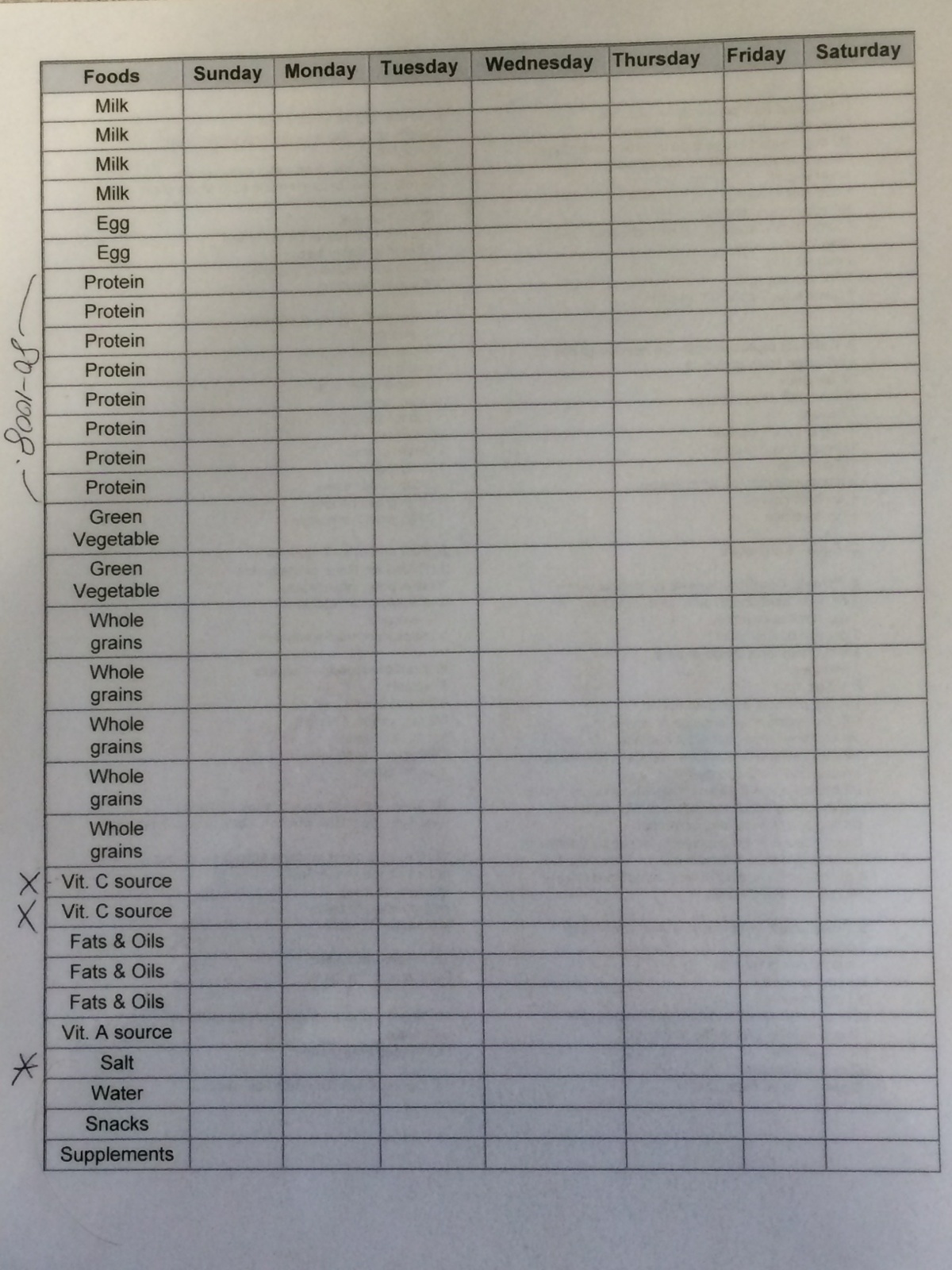
Pregnancy Diet Worksheet
Symptoms
Nothing new to report! Tomorrow we’re 6 months! HOLY SMOKES!
 Playing House